Showing posts with label green. Show all posts

Monday, February 21, 2011

Holy Renewable Energy Project, Batman: Norway and Jordan's Deal

I will be the first to admit that this blog focuses largely on the inner workings of America's alternative energy landscape, and a lot of that can be attributed to the fact that I live smack in the middle of the United States. However, this focus should not be mistaken for me being blind to the developments outside of America's scope.

Instead, it is more a nod that there is SO MUCH happening around the world in the realm of environmental energy that it would be impossible to cover it all in the three-post per week nature of this blog. Sure I could cover more if I didn't spend a ton of time researching my Sunday Comic segments, but lets face it, comics are awesome and I'm not going to cut a segment that creates 60% of this blogs traffic.

Putting all of that aside, there is an awesome development in the works between Norway and Jordan involving the Sahara Desert, water/food scarcity, and alternative energy:
inhabit.com reports:
The chosen test site is a 200,000 square meter plot in Aqaba, a coastal town in the far south of Jordan, close to the shore of the Red Sea. The agreement also secured an additional 2 million square meters for later expansion. The Sahara Forest Project combines Concentrated Solar Power (CSP) and Seawater Greenhouses to provide a huge amount of renewable energy and sustainable agricultural solutions, essentially turning one of the world’s most inhospitable environments into a flourishing oasis.

Seawater Greenhouses use solar power to convert salt water into fresh water, which is then used to grow fresh vegetables and algae (to absorb CO2). CSP provides the energy to power the whole operation. CSP uses thousands of mirrors to direct sunlight upon a water boiler, heating it to over 1000 degrees Fahrenheit. The boiler produces steam, which moves a turbine to create energy.
If this project is completed, this will be a huge win for the alternative energy movement that can act as an example for the rest of the world. The following image is a conceptual representation of how this project could eventually look.


To read more about the agreement between Norway and Jordan, click here.
Friday, February 18, 2011

Short Comment Friday: Bike Path Edition

Welcome to Short Comment Friday!!! This is a new segment spawned purely out of laziness, because lets face it, I'm on vacation in Florida and the 80°F weather has destroyed any ounce of productivity I may have had before I went to the beach.

While I have been down here on Sanibel Island, I have fallen in love with bike riding all over again. This island has bike paths all over the island that allow you travel quicker than you would be able to in a car.

Long story short, I wish all areas were like this.

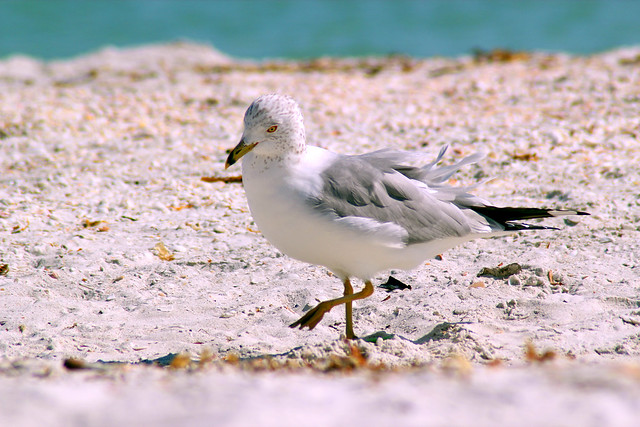
Now I'm off to have a staring contest with this guy!

Friday, January 28, 2011

LEED Design: ConAgra's Food Production

Not to long ago I went on a lengthy rant about how awesome Walgreens is being by rolling out a fleet of LEED certified pharmacies, which you can find here. The main point of my article was that the public benefits from Walgreens' initiative because they are indirectly educated by being surrounded with green initiatives.

Another form of indirect consumer education can be seen with ConAgra Foods. They are the proud owners of the first LEED Platinum certified frozen food manufacturing plant. This is impressive because manufacturing plants are resource intensive, but this proves that companies can still be efficient in their traditional practices while embracing more efficient and modern technologies.

It is a safe bet that ConAgra Foods will advertise their green practices on any products that come out of this plant, which will attract new customers while also turning consumers on to greener practices. This could place new pressure on ConAgra's competitors that could end up leading to more food manufacturers pursuing LEED certification.

This is the direction that I have expected the world to start head, but it is nice to actually observe it happen before my eyes. It may seem like a small deal right now, but down the road we could look back and point to this as the beginning of something big.


And guess who told you about it?


Friday, January 21, 2011

Label Recognition: Wind Washing?

I came across an interesting article on the NY Times Environmental Blog that was talking about a new label that people may start to come across more as they are shopping.


A few companies are hoping that this label will begin to appear on products in the near future:
Now, a group of companies and environmental organizations, including the wind turbine maker Vestas and the World Wildlife Fund, have unveiled a new label that they hope will tug at consumers’ heartstrings by detailing to what extent wind power was used to make various products. Called “WindMade,” the label will be run by a nonprofit foundation and will require participating companies to undergo certification.

Exactly how the certification process will work has not yet been decided, and further details will be announced this month at the World Economic Forum in Davos, Switzerland, the group behind the initiative said.
I want alternative energy to play a bigger role in the world, for both social and economic reasons, but I hope that the requirements to apply this label to your products are strict.

If any corporation that incorporates a fraction of wind energy in their utility bill can slap this label on their products, then I believe that this is just another form of "green washing" which can be seen all over the place these days.

I can appreciate that wind energy has suffered recently due to cheap natural gas cannibalizing demand to switch to wind turbines, but mislabeling products to spark demand for more wind energy is not the answer. It may work in the short run, but ultimately it cheapens the entire concept of clean energy and distracts from the real issues that clean energy is attempting to address.

I remain confident that companies like Vestas and organizations like the WWF will not screw this up, but this is certainly opening the door for other companies to end up creating their own labels that may not have the same standards.

Wednesday, January 19, 2011

Back To Basics: Bike Infrastructure

Living near Chicago, I have enjoyed the perks of having various bike paths throughout the city and along the lake. It is great exercise and provides and cheap way to get from point A to B without emitting any pollution or consuming fuel.

My Sweet Ride
This addresses two obvious issues that are very important to this country:
  • Weight Control
  • Energy Consumption
To my surprise though, job creation may be addressed through the expansion of a biking infrastructure. A study in Baltimore has shown that the investment into biking infrastructures creates more jobs when compared to a focus on traditional roadways:
Each $1 million spent creating on-street bike lanes directly creates 7.9 jobs and creates a total of 14.4 jobs when we include the indirect and induced effects,” the author, Heidi Garrett-Peltier, writes, “The two categories of road repairs have the lowest employment effects, with 3-4 direct jobs and approximately 7 total jobs created for each $1 million.
Obviously this interests me because biking reduces pollution and helps people lead a healthier life, all while being financially attractive to the government.

As I have said before, the only way any of these environmentally friendly projects will achieve staying power is if they make financially sound arguments, and as far as I can tell from this Baltimore study, a furthered investment into biking infrastructures seems like a no-brainer.

Monday, November 8, 2010

Tidal Energy Is Making Important Strides

It is quickly becoming clear that big battles are rapidly approaching on the political horizon, and I am going to do my best to cover these events as thoroughly as I possibly can. However, I won’t be getting to those things until tomorrow because I still need time to wrap my head around the numerous issues that are popping up.

Right now I’m going to talk about a notable event in the world of alternative energy. While the alternative energy marketplace is dominated by news about wind and solar developments, today marks the day that a shallow-water tidal energy system in the UK has been successfully tested and proven.

*Yes. I made that comparison just so I could post this picture from one of the best South Park episodes ever.

While the media views tidal energy as the red headed stepchild* of the alternative energy community, it is important that this technology is still being researched and developed. This is because at the end of the day, no matter how well wind and solar are performing, they are subject to their natural limitations:

  • Wind
    • Produces the most energy at night
    • Windiest in remote areas leading to transmission issues
    • Subject to pressure systems
  • Solar
    • Only producing energy during the day
    • Subject to cloud cover
    • Not as effective in the further Northern and Southern Hemispheres

The point of listing these limitations isn’t to suggest that these technologies are inefficient in addressing our energy needs. Instead, it is to show that it will take a collaborative effort between multiple technologies in order to make clean energy work. This is why the further development of tidal energy is wonderful and necessary because it can help lessen the burden on wind and solar technologies.

Obviously tidal energy is only really useful where there are tides (“Thanks, Professor!”), but when coasts contain some of the most densely populated cities and ports; tidal energy makes sense. By combining tidal energy with offshore wind farms, clean energy stands to make a large dent in the energy consumption of these areas.

Saturday, November 6, 2010

Reader Email: High-Speed Rail v. Road Maintenance

This blog has only been live since October 23, but within that time, I have gotten more comments and site-traffic than I ever thought I would in a short two week period (yes, 15 comments isn't earth-shattering, but it is still great to know people are interested).

Building upon this trend of community participation, I got an email last night from some a reader going by the name of Jon with a pointed question about the true benefits of high-speed rail systems:
Jon writes:
In your weekly review, you talk about these high-speed rail systems damaging the growth of our nation's infrastructure.  I know that in Wisconsin they are talking about taking the money and diverting it to improving the roads instead.  Don't you think that in a world where most people own a car, money would be better suited to be [spent]* on the roads that these car owners are using?
This is a great point which I am sure that many people do think about when they hear about the $800+ that is planned to be spent on these rail systems.  In the short-term, it is mind-numbing to think that this money is going to be focused on one particular project.  However, I believe that in the long-run the state of Wisconsin (along with any other state that implemented these rail-systems) will actually make and save money from high-speed rail.

They will make money because Wisconsin is a beautiful state with many scenic areas to visit (if you haven't been to Northern Wisconsin, you are missing out) and you also have a sports rivalry between Wisconsin, Minnesota, and Illinois.  By having highly efficient rail systems leading into Wisconsin, you could then make the prospect of heading to Wisconsin for the weekend even more appealing to tourists and sports fans which would end up pumping even more money into the state.

Who doesn't want to see this guy?
Wisconsin would also save money because they wouldn't have to spend so much money constantly maintaining their roadways.  Traffic from tourism takes a large toll on roadways which places a large demand on maintaining the roads.  By having a rail-system in place, you would reduce the need for people to drive their cars on the roads which in turn lowers the demand to constantly be resurfacing your roadways.

Finally, I know most people have a hard time caring about it because right now there is no real cost to it, but by reducing the level of cars on the roads you are reducing the level of pollution being emitted by traffic.  To put it in perspective, Wisconsin is such a beautiful state when it comes to trees, wildlife, and waterways - all of this is damaged by an increased level of traffic-pollutants.  This is just another thing that high-speed rail would help mitigate.

These are the most prominent reasons for why I think that spending money on high-speed rail is a smarter investment than continually dumping money into the financial-vampire that is road maintenance.

Thanks for writing in, it definitely took me by surprise and I really do appreciate the level of interest that has been show in this blog.  I encourage others to feel free to write me an email if they ever have any comments - and if you don't feel like doing that, then go ahead and just write something in the 'Comments' section below each post.

Also, don't forget to follow Sustainabili-City's Twitter and if you have an account with Google (who doesn't?) then go ahead and click the 'Followers' section on the right-side of this page!


*Corrected a spelling error.

Friday, November 5, 2010

Weekly Review - November 5, 2010

Every Friday I take a break from covering individual topics and instead highlight the most notable stories from the previous week in an attempt to give you some talking points for the weekend.

Tesla & Panasonic
  • The What
    • Tesla, the cutting-edge electric car manufacturer, has partnered with Panasonic to pursue more energy-efficient and powerful batteries for their cars.
  • Why You Care
    • Panasonic has already been working with Toyota on the Prius to make their fleet of hybrids as efficient as possible, and Toyota has already been working with Tesla to advance the industry – so it only makes sense that Tesla and Panasonic begin to work together.
    • Batteries have always been one of the biggest points that has held back electric car development due to range anxiety. Even though many (all) of my readers can’t exactly afford the Tesla Roadster, it is encouraging to see such prominent companies attempting to tackle these issues because it will ultimately benefit the entire industry.

Proposition 23 Defeated
  • The What
    • Prop. 23 was a proposal to suspend the important Global Warming law established in California that essentially demands a higher level of air pollution control.
  • Why You Care
    • This is an important victory because Prop. 23 was heavily funded by many out of state heavy-hitters (mainly oil-companies). By defeating such a heavily funded campaign by the oil industry, this is setting an example that others states can adopt more stringent air quality standards leading to the establishment of more efficient energy sources and practices.

Election Stuff
  • The What
    • There was an election this week? First I have heard about it.
  • Why You Care
    • People have a tendency to overreact to election results, no matter what they are. I talked earlier this week about how people need to not live and die on these results because I do believe that it is a healthier to believe that the last two years were worthless and the next two are hopeless...with that said, it is disappointing to hear about so many plans to unravel the positive environmental actions that have been in the works, such as high-speed rail systems.

High-speed Rail Under Attack
  • The What
    • High-speed rail is one of the more promising energy-efficient and environmentally friendly forms of public transportation that has been proposed in America in a long time. Up until now, there have been great strides towards making this a reality.
  • Why You Care
    • Europe has been enjoying these systems for a long time now, and it is about time that America started to catch up. However, almost immediately after the elections took place this past Wednesday, there is talk in Ohio, Wisconsin, and Florida about halting the development of these systems.  This is an incredibly shortsighted attempt by politicians to flex their political muscles and will do nothing but stunt America’s growth. Here are just a few things that will suffer:
      • Infrastructure
      • Energy Security
      • Environmental Health
      • Job Creation
      • Tourism
      • Innovation


Sustainabili-City Posts

Finally, here are the posts that you might have missed from the past week:
Thanks to those that have been commenting! Have a good weekend!

Wednesday, November 3, 2010

Don't Live Or Die On Election Results

Judging by commentary on Twitter as well as overhearing conversations on the train today, apparently there was an election yesterday – and here I was thinking that John Stewart and Steven Colbert were just giving away free entertainment this past Saturday.

Seeing that most people treat elections like a sporting event by being really opinionated the morning after a win (or loss) and then becoming less animated about the results a day or two later, I’m not going to waste my time talking about this too much.

Republicans:
Congrats, I guess.

Democrats:
Sorry for your luck.  Just think of this as another reason that it may be better to be color-blind*.

*That and solving a Rubik's cubes is a snap!

No matter what your political affiliation is, here are some positive (or potentially positive) environmental things that came out of the elections yesterday:
  • 25 of the 42 Democrats who voted against the climate bill lost their seats.
The Democrats losing their seats is loosely positive because one way to view it is that these seats will be filled with people that are more open-minded towards environmental issues, but another way to look at this is that these seats are potentially filled with people that are going to be no different.

Only time will tell.

One thing is for sure though; any progress on the environmental front will have to be a cooperative effort from both sides. The best way that this can happen is when politicians from both sides begin to see the economic benefits of pursuing alternative energy and sustainable practices - which is exactly how our government is supposed to work in the first place.

Friday, October 29, 2010

Weekly Review - October 29, 2010

Every Friday, I will review the big developments that happened during the week so that you can stay current and (attempt to) sound smart when talking to others.

Range Anxiety
  • The What - This is a term that has been thrown around for a while now, but it has been popping up more and more in the coverage of electric cars.
  • Why You Care - Even though people don’t typically drive more than 40 miles on a daily basis, the fear that your car could run out of power while driving is a legitimate fear that could damage the sales of these cars. Like the first iPhone, battery capacity will improve over time, but initial purchases need to take place to provide the developers with capital they can reinvest into development.
Naval Biofuel
  • The What - Not a day went by this week without Sustainabili-City’s twitter account being inundated with headlines referring to the Navy testing out a Command Boat that runs on a 50% mix of algae-based biofuel.
  • Why You Care - Whenever the military begins purchasing a new technology ($424/gallon of algae-biofuel), new markets begin to emerge as the developers enjoy a new source of funding. Think cell-phones or the internet.
Wind Declining
  • The What - In a report released by AWEA, the wind energy industry is slowing down to levels previously recorded in 2007. This is most evident when considering that Vestas laid off 3,000 workers this past week.
  • Why You Care - Damnit. Oscillations happen all the time in new (and old) industries as they try to discover the efficient level of operation and growth, but this definitely is a punch in the balls.
Environmentally Friendly Halloween Costumes
  • The What - If you are like 80% of people, you have waited until the last moment to figure out what you are going to be for Halloween.
  • Why You Care - Face it. Halloween is the most enjoyable holiday of the year and you should never pass up an opportunity to celebrate with friends. With these last minute ideas, you can create a great costume out of things you potentially already have saving you from spending a lot of money on something that you will potentially only wear once.
My Favorite

Thursday, October 28, 2010

Copy and Paste

Not often will I blatantly quote the New York Times, but it is Thursday and I have turned almost all of my attention towards my costume for Halloween this weekend - so...


Plagiarism on!
Updating and expanding the electrical grid to accommodate new sources of energy will be the biggest challenge, and will require partnerships among states, federal authorities, the utilities and private investors. The Google project could be crucial to delivering wind power to Eastern cities, but major investments will also be needed in the West and Southwest. President Obama recently declared that no industry has greater potential to create jobs than clean energy. He is right. But it is never going to happen unless the administration and Congress do a lot more to push it ahead.
The entire article can be found here at the NY Times' website, but essentially it talks about how America needs to pick it up when it comes to alternative energy programs.

I will hammer this point forever.  You don't have to be a hippie or some idealist to see the benefits in alternative energy and energy efficiency along with other sustainable movements.

These things create jobs.
                 Jobs create money.
                            Money buys things.
                                    Things being bought sustain other jobs...and so it goes.

I can go on a huge rant about national security and environmental benefits that stem from these things, but I'll save that for another day.

Try to tell me that pursuing these technologies and practices are not the rational next move.

Wednesday, October 27, 2010

D.I.Y.D: Using Outlet Timers To Shut Down Power Vampires

Most of the time you are going to find me talking about developments that will eventually impact your lives. Despite the (hopefully) exciting nature of these developments, the vast majority of readers won’t experience the full benefits for some time.

That is where these D.I.Y.D (Do It Yourself, Damnit) posts come into play. I will regularly post things you can do in your daily lives that will save you money and help you lead a more sustainable lifestyle.

One of the most common suggestions made when talking about methods to reduce your energy consumption around the house is to connect your energy hungry appliances (televisions, entertainment systems, etc) to a surge protector and turn the protector off when you are not using the appliances.

While this is a great suggestion and does provide a noticeable level of relief on your electric bill, it can become somewhat of a hassle. This is especially noticeable when you have a large entertainment system or computer system that is constantly draining power, but to unplug it when you aren’t using it means you would have to move a large desk (or in some college student’s cases, an elaborate systems of milk crates).


To help make it easier to stick to this plan, go out and buy an outlet timer and plug your surge protector into it. These allow you to set certain times during the week where the timer will switch off the surge protector for you.

An example of this would be that you have your outlet timer switch everything off during the hours you are at work and at night while you sleep. Timers are relatively cheap and eliminate the ‘I can’t believe I forgot to switch off my entertainment system…again’ moments.
You may ask, “But dude, what if I am playing Halo: Reach on Xbox at 3 AM and the timer shuts off my system. Won’t that lose all my progress?”
To this concern I respond, “Well, person who still says ‘dude,’ I would be more concerned about playing video games at 3 AM, go to bed.”
Yes, it is convenient to have your entertainment system supplied with power all the time because you can turn it on at will, but these are also some of the largest unnecessary drains on power found in households.

By introducing a little discipline to your life, an outlet timer becomes a small and effective step towards making your home more energy efficient, and will make the wait for new energy technologies to become available less strenuous (while also developing some good habits along the way).

Monday, October 25, 2010

Twitter


Make sure to follow Sustainabili-City on Twitter.

Alternative energy and sustainable living practices are highly dynamic with new developments occurring all the time.  I'll be doing my best to cover most of the topics, but inevitable some stories will "fall through the cracks" of the internet, and that is where I will be using Twitter to list these developments.

Saturday, October 23, 2010

Prelude

Let me be clear.

At this stage of my life I know very little about alternative energy, smart grid technology, and sustainable living.

However, this lack of a thorough understanding doesn’t make me blind to the potential of these fields. Instead, every day I look for an opportunity to talk about these emerging industries. This is for two reasons:

  • I believe that the more people hear about these things, the less that they will believe that alternative energy and smart energy-distribution systems are some futuristic dream.
  • I like sounding smart.

These two points highlight the purpose of this blog (sarcastic self-indulgence and shameless promotion of clean practices).

By discussing these sustainable advances, I am hoping to make my (millions of) readers and Stumblers more aware of the issues while also furthering my own understanding so that I can continue to (think I) sound smart.

I invite anyone to comment on or criticize anything that I say here, because ultimately we will all be benefit from the conversation in the end…hopefully(maybe?).


Probably.