Showing posts with label food. Show all posts

Wednesday, January 26, 2011

Sustainability Inspired By Food-Coma

Today's blog is going to be a little on the short side for two reasons. The first reason is that the job search is just chugging along, if by "chugging along" I mean a full time job with minimal feedback...but I gotta keep on punching.

The second reason is I just had lunch and now I am slipping into a food-coma which will make it difficult for me to balance between blogging AND job searching, so I am going to have to focus all my energy on the search and sacrifice the blog for the day.

Since my lack of productivity can be linked to food, it probably comes as no surprise that I honed in on an article about cooking.  The entire article can be found here, but the excerpt below pretty much explains what the entire thing is about.
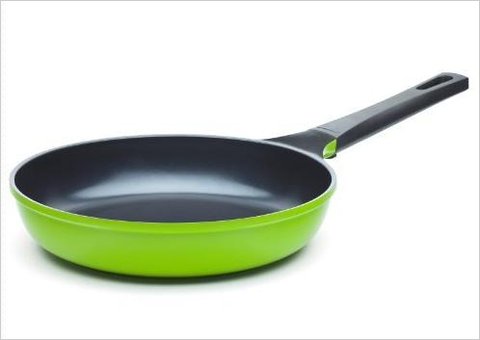
But recently my husband bought me a pan coated in textured ceramic. It is promoted as green because it is made completely without PFOAs or other toxic chemicals, according to the manufacturer. Fab.

But I also love the way the pan feels and performs. Not only does it easily wipe clean of even foods like scrambled eggs with American cheese (no, I don’t make this — my 9-year-old son does), but when I need to brown something, it leaves behind enough bits to make a nice sauce. The weight in my hand is very satisfying, too.
Yes. The New York Times actually published something with the word "Fab." Though I have never watched it, I am fairly certain that The Jersey Shore is to blame for this type of language.

Long story short, here is another example of sustainable products being better for you and the environment while not sacrificing function or style. Seriously. How FAB is this pan?!?!

...Now if you will excuse me, I need to find a job, or at least get an interview...

Wednesday, November 10, 2010

The Importance Of Sustainable Food Markets

Sitting back last night, I realized that I have spent a ton of time talking about alternative energy and energy efficiency technologies - it is almost like I want to get a job within those industries (hire me, please).

To switch it up today, I'm going to talk about the importance of moving towards a more sustainable food market because many people just aren't aware of the dangerous situation we are moving towards with our current food consumption rate.

Population continues to rise as the years pass, and I guess we have to feed these people as come into this world.  ("People need food? Thanks, Professor!")  Combining the increasing population with our trend of overconsumption and America's quest to make sure that at least 40% of our citizens are obese, obtaining food is already becoming a problem.

One of these problems is already visible in the seafood market.  The Bluefin Tuna has already been overfished nearly to extinction, made only worse by the fact that the market is now pricing a single fish at more than $150,000 which doesn't exactly say, "Don't fish me."

Yay! Charts!
This isn't to say that the Bluefin Tuna is the only fish experiencing problems.  As you can see from the graph above, pretty much everything is under attack.  Do people hate fish and have decided that they must all be destroyed? No.

Instead, it is just that people are not aware of how much work goes into their food getting to their dinner table, and this disconnect leads to increased consumption which then turns into rapidly increasing fishing rates.

A not so simple solution to this problem is to educate people so that they can make smarter purchases when buying their seafood dinner.  I, for one, absolutely love sushi (to the point where I'm fairly certain mercury poisoning is in my future), and lately to make sure that I'm not contributing to the overfishing of fish that are at risk I have been using a guide that CP sent to me the other week, which can be found in the link below:

Seafood Watch Pocket Guide

This guide is wonderful because it allows you to select the region that you are going to be buying fish in, and it outlines the safest choices, good alternatives, and fish that you should always avoid.  Combining this guide with a more responsible level of seafood consumption, we can start to form some habits that will benefit both us and the seafood industry down the road.


Oh...and the fish will probably appreciate the whole 'not going extinct' thing as well.